
Table of Contents
Used Car Buying Checklist:9 Essential Checks to Avoid Costly Mistakes
By the John Autos Editorial Team • 9 min read • Updated June 2026
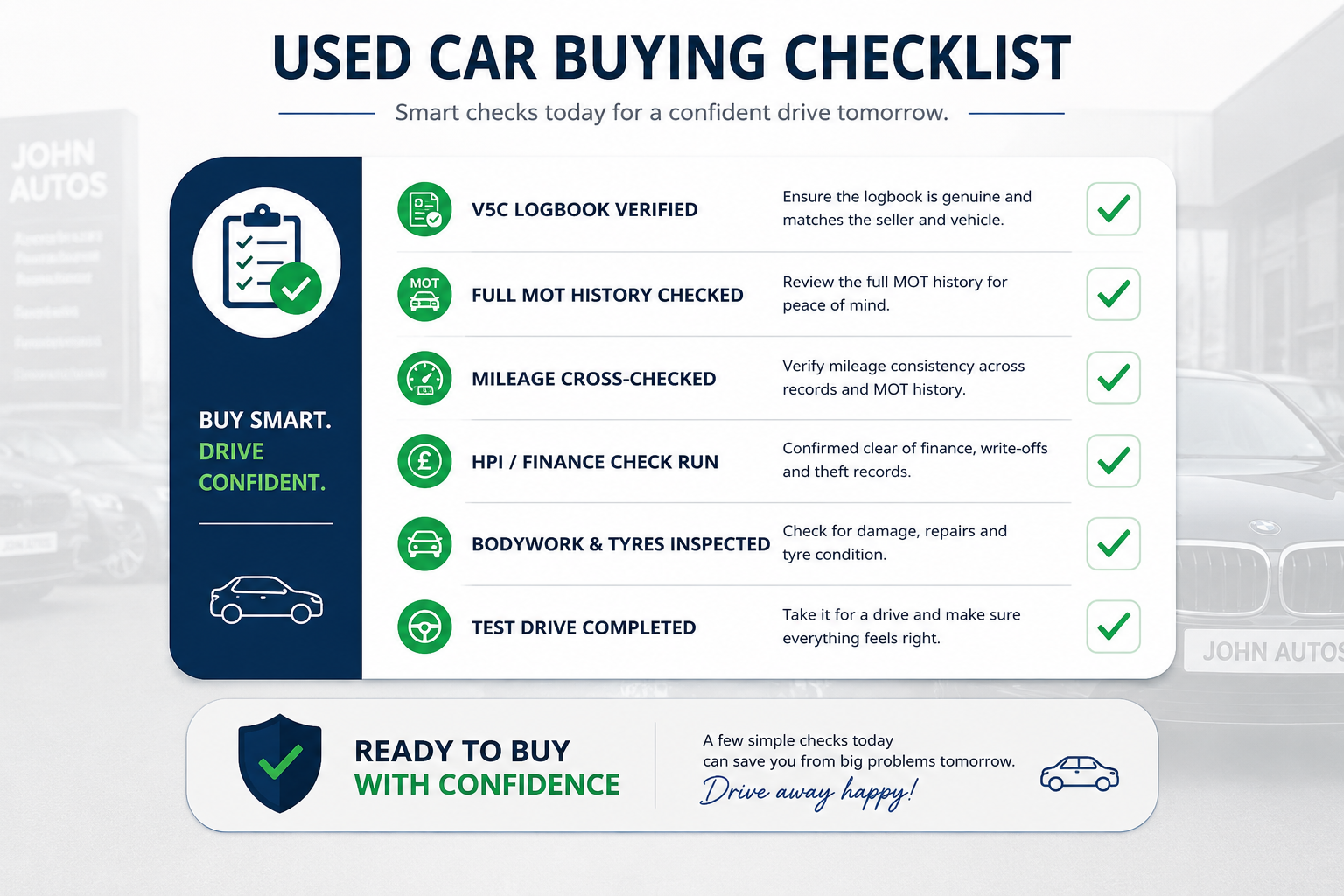
A thorough used car buying checklist is the difference between a confident purchase and an expensive mistake.
Buying a used car is one of the biggest purchases most people make outside of a house, yet it’s surprisingly easy to skip the checks that actually protect you. A proper used car buying checklist takes the guesswork out of the process, turning a nerve-wracking viewing into a calm, methodical decision you can feel confident about.
With more than 8 million used cars changing hands in the UK every year, the odds are firmly in the buyer’s favour — there’s always another good car around the corner if something doesn’t check out.
This guide walks through every stage of a thorough used car buying checklist, from the paperwork you must see before handing over a penny, to the test drive that reveals problems no listing photo ever will.
Whether you’re buying your first car or you’ve done this a dozen times before, it’s worth resisting the urge to rush. The most common regret among used car buyers isn’t paying slightly too much — it’s skipping a check that would have been quick and free, only to discover the problem weeks later when it’s far more expensive to put right.
Why You Need A Proper Checklist
Skipping checks doesn’t just risk buying a car with mechanical problems — it can mean unknowingly buying a stolen vehicle, one with outstanding finance, or one that’s been clocked to hide genuine mileage. None of these are obvious from a quick look or a five-minute test drive around the block, which is exactly why a structured approach matters more than instinct alone. This is exactly why every used car buying checklist starts with verification, not assumptions.
A good checklist also puts you in a stronger negotiating position. Spotting a genuine issue during inspection gives you real leverage to ask for a price reduction or have the seller fix it before you commit.
Sellers generally respect a buyer who clearly knows what they’re checking far more than one who simply haggles on price alone, and a methodical approach tends to result in a smoother, more honest conversation either way.
It’s also worth remembering that you still have legal rights even if something slips through. Under the Consumer Rights Act, used cars bought from a dealer must be of satisfactory quality, fit for purpose, and as described — but those rights are far easier to rely on if you’ve documented the car’s condition and paperwork properly at the point of purchase.
1. Paperwork Checks Come First
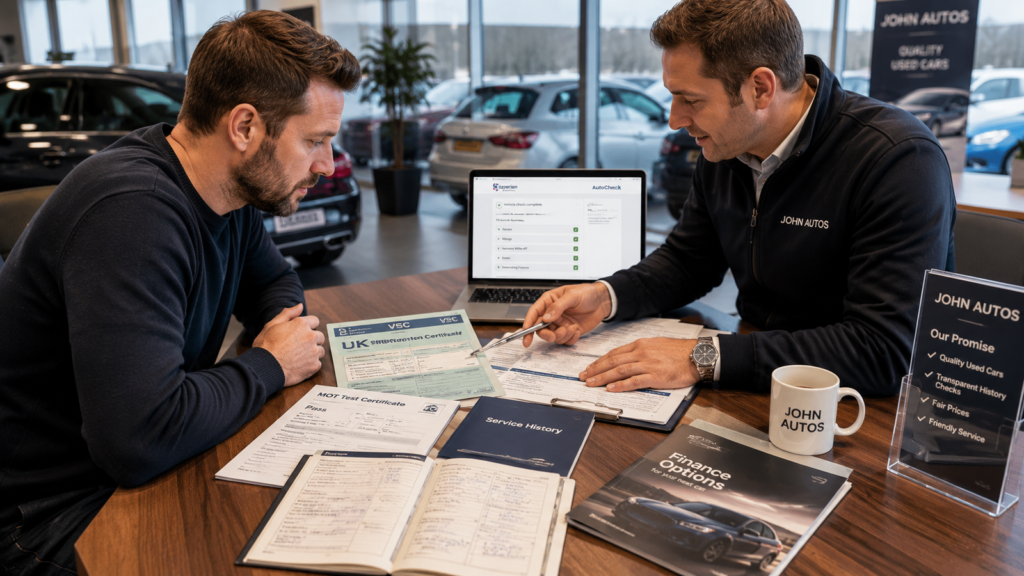
Before you even look closely at the car itself, the paperwork has to add up. If the legal side doesn’t check out, nothing else matters, however good the car looks. It’s the non-negotiable first step in any used car buying checklist.
- V5C logbook — confirm the seller’s name matches the registered keeper, and check the VIN on the document matches the VIN on the car.
- MOT certificate — ask to see the current certificate and confirm it isn’t due to expire imminently.
- Service history — a full, stamped service book is ideal, though even partial history is better than none.
- Finance documentation — ask for proof that any outstanding finance has been settled before the sale.
2. Run Online History Checks
Several free and low-cost online tools let you verify a huge amount before you even arrange a viewing, which can save you a wasted trip entirely. These online checks form the second key stage of your used car buying checklist.
- Check the free MOT history online to review pass/fail patterns, advisories, and mileage recorded at each test.
- Run a paid vehicle history check (HPI Check, Experian AutoCheck, or similar) to reveal outstanding finance, theft records, or write-off history.
- Confirm the car’s tax status to make sure it isn’t showing as SORN while the seller claims it’s taxed.
You can check a vehicle’s MOT history for free directly on the official GOV.UK MOT history checker, which pulls data straight from the DVSA and is the most reliable starting point on any used car buying checklist.
3. The Physical Inspection
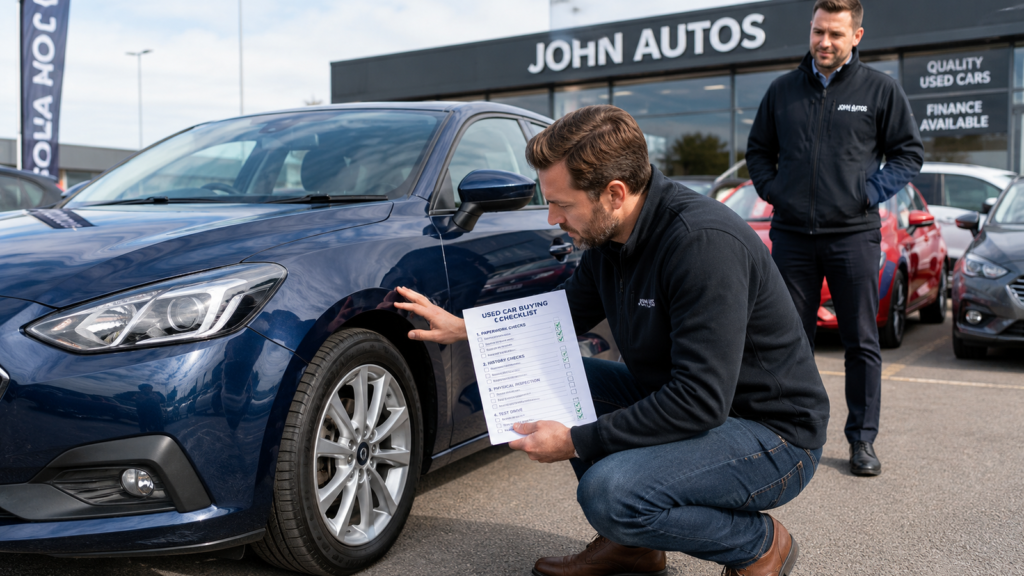
This stage of the used car buying checklist is where you roll up your sleeves. Always view a car in daylight, ideally when it’s dry, since both rain and darkness make damage far harder to spot. Walk around every panel slowly and methodically.
Bodywork And Paint
Look for mismatched paint, uneven panel gaps, or overspray on rubber trim, all of which can indicate previous accident repairs. Check wheel arches, sills, and door bottoms closely for rust.
Tyres And Wheels
UK law requires at least 1.6mm of tread depth across the middle of each tyre. Uneven wear can point to suspension or alignment problems that may need fixing. Always include tyre depth in your used car buying checklist before agreeing a price.
Under The Bonnet
Check oil and coolant levels, look for leaks or sludge, and check hoses for cracking. A well-maintained engine bay is usually a good sign of how the rest of the car has been looked after.
Interior And Electronics
Test every window, light, and electronic feature. Check the mileage on the dash against the figures in the service book and MOT history, and look at wear on the driver’s seat and pedals — heavy wear alongside suspiciously low mileage is a red flag worth investigating. Mileage verification is one of the most important steps in any used car buying checklist.
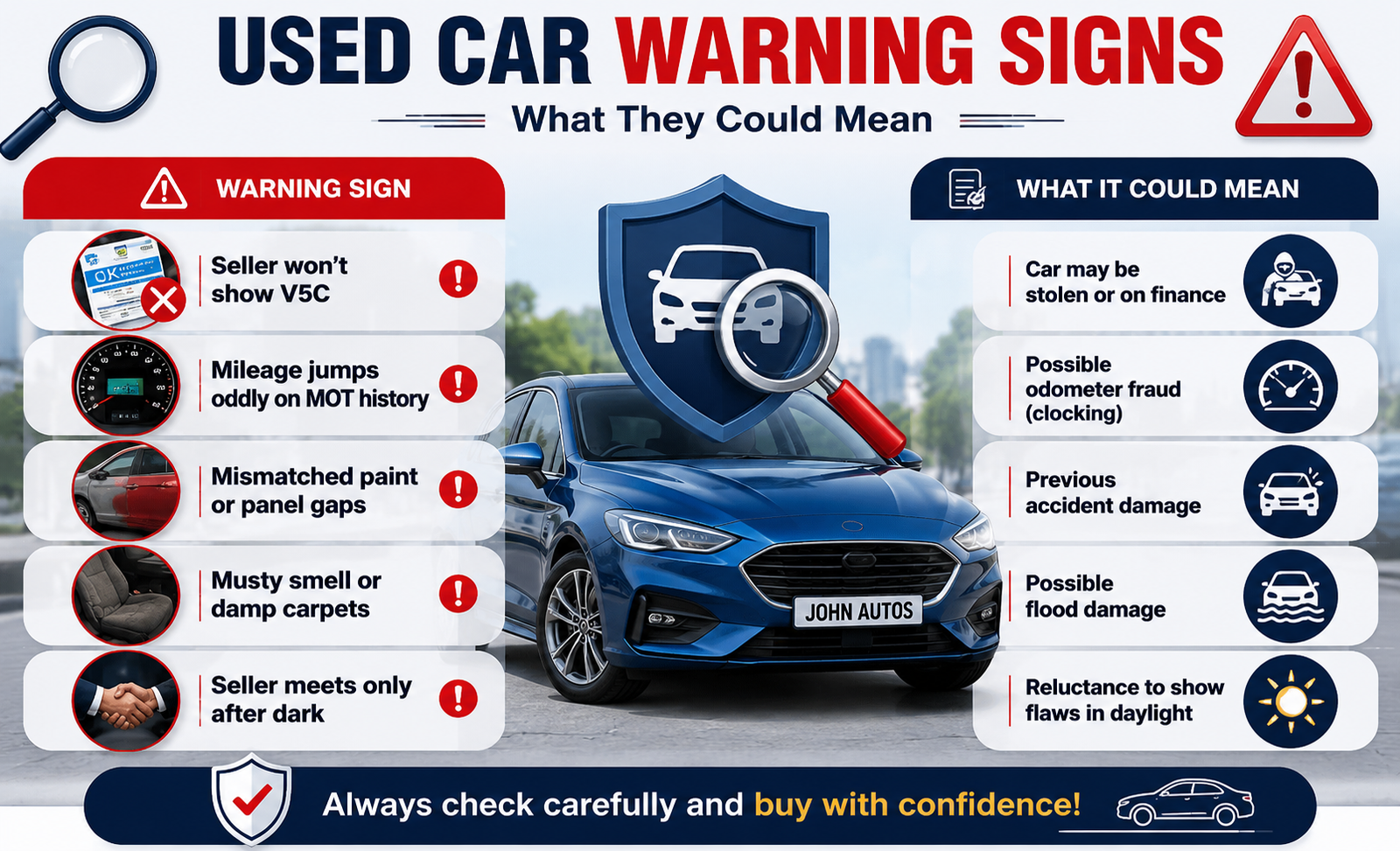
Common red flags to watch for when working through your used car buying checklist.
4. Don’t Skip The Test Drive
Never buy a used car without driving it first. No used car buying checklist is complete without a proper test drive, since a short, polite spin reveals far more than any inspection while stationary ever can.
- Start the engine from cold if possible — it should fire up smoothly without excessive smoke or rattling.
- Listen for knocking, clunking, or squeaking over bumps and while turning, which can suggest worn suspension or steering components.
- Check the clutch bite point and gear changes feel smooth and natural, not stiff or vague.
- Test the brakes at a safe speed to confirm the car stops straight, without pulling to one side.
5. Red Flags That Mean Walk Away
Most issues found during a used car buying checklist are negotiable or fixable, but a small number should make you walk away entirely, however good the price seems. A seller who can’t produce the V5C, mileage figures that don’t add up across MOT records, or a musty smell suggesting flood damage are all serious enough to end the conversation. These are the moments where your used car buying checklist should override any temptation to compromise.
Trust your instincts here as much as the paperwork. If a seller is reluctant to meet during daylight, pressures you to decide on the spot, or gets defensive when you ask reasonable questions, treat that as a red flag in its own right — a confident, honest seller has nothing to hide and will usually welcome a thorough inspection.
Using Your Findings To Negotiate
Every issue you uncover while working through your checklist is useful information, even the minor ones. Worn tyres, an upcoming MOT, or a service that’s slightly overdue are all legitimate reasons to ask for a fair price reduction, and most sellers expect some negotiation on a used car. Make sure you’ve researched the typical market price for the exact make, model, age, and mileage beforehand, so you know whether the asking price is already fair or whether there’s genuine room to negotiate.
After You’ve Said Yes
Once you’re happy and ready to buy, make sure you tax the car immediately, since tax doesn’t transfer automatically with ownership. Keep a copy of all paperwork and any receipts from the sale in case you need them later. Buying from an established, reputable dealership rather than a private seller removes much of this risk entirely, since reputable dealers carry out these checks before a car ever reaches the forecourt.
Browse our full range of quality used vehicles at John Autos, where every car has already passed a thorough inspection, or get in touch with our Leighton Buzzard team if you’d like a second opinion on any car you’re considering buying privately. This final step completes a thorough used car buying checklist from start to finish.
1. What is the most important thing to check before buying a used car?
The paperwork comes first on any used car buying checklist. If the V5C logbook, MOT history, and finance status don’t check out, no other inspection matters, however good the car looks.
2. How do I check if a used car has outstanding finance?
You’ll need a paid vehicle history check such as HPI Check or Experian AutoCheck. These access finance house databases and will reveal any hire purchase or PCP agreement still registered against the car.
3. Is it free to check a car’s MOT history?
Yes, checking a car’s full MOT history is completely free using the official GOV.UK MOT history checker, which shows every test since 2005 including mileage readings, advisories, and pass or fail results.
4. What are the biggest red flags when buying a used car?
A seller who can’t produce the V5C logbook, mileage that doesn’t increase consistently across MOT records, mismatched paint suggesting accident repair, and a musty smell hinting at flood damage are all serious red flags worth walking away from.
5. Is it safer to buy a used car from a dealer than privately?
Generally, yes. Reputable dealers carry out most of these checks before a car reaches the forecourt and often include a warranty, whereas private sales place the full responsibility for checking on the buyer.